
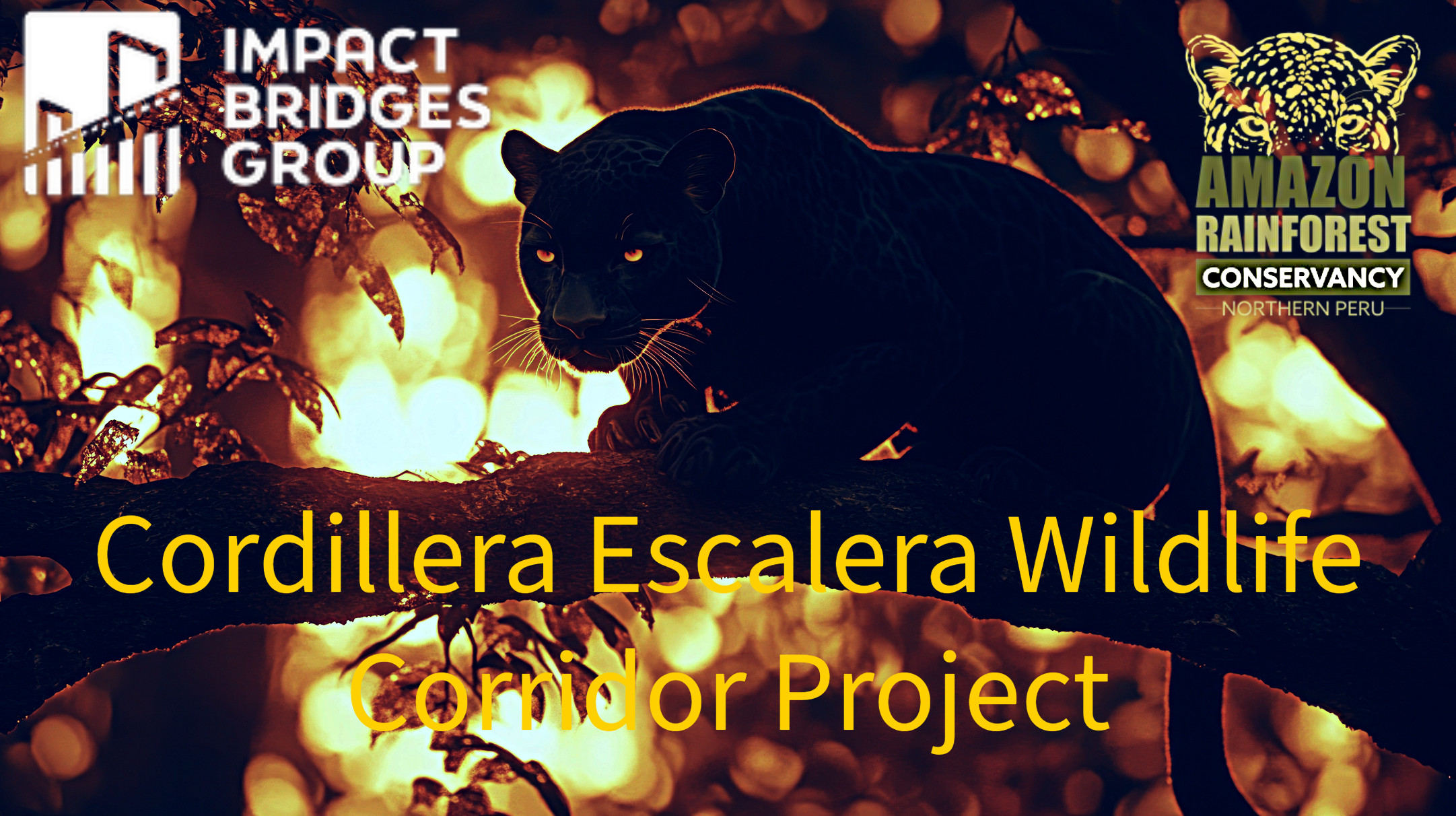
In Peru's Cordillera Escalera valley, the absence of a formal wildlife corridor has fuelled continuing tension between livestock farmers and jaguars, threatening both rural livelihoods and regional biodiversity. As many farmers in the area approach retirement, the Amazon Rainforest Conservancy Northern Peru (ARCNP) has a timely opportunity to purchase their land and reconnect fragmented habitats, restoring safe passage for wildlife while reducing human-wildlife conflict. Realizing this opportunity requires more than land acquisition alone: it requires a system that grounds every decision
in evidence, not intuition.
To meet this need, ARCNP is partnering with IBG to co-develop a Performance Management System (PMS), an integrated information system built around four core functions: systematic data collection, data management, insight generation, and corrective action. The PMS will synthesize different data streams, including ecological monitoring, satellite imagery, social metrics, legal information, and economic indicators, into near-real-time insights that allow project leaders to adjust quickly and confidently. Gender-disaggregated data collection is embedded from the outset, recognizing that men and women experience wildlife risk, land ownership, and conflict resolution differently. This approach ensures that the corridor design reflects the full range of community realities, positioning women not as passive beneficiaries but as active leaders, ecological knowledge-holders, and financial agents of change.
This partnership brings together mutually reinforcing strengths: ARCNP will lead grassroots community participation, co-designing the project's theory of change and key performance indicators so that local voices actively lead decision-making. IBG will contribute specialized technical expertise, drawing on IBG’s many years of experience in project design, impact validation, and investment financing, alongside research partnerships with Belmont University and the University of Surrey. Together, the two organizations will deliver not just a physical corridor, but a fully community-owned adaptive management tool, one that turns verifiable, well-timed data into transparent governance and continuous improvement, rather than a top-down compliance exercise.
Ultimately, the CEWC Project intends to transform ARCNP into an authentic learning organization that can demonstrate verifiable impact to funders, government partners, and the communities it serves. Success will be measured by the project's ability to translate evidence-based adaptations into real outcomes: healthier forests, restored jaguar populations, and more resilient, equitable livelihoods for local communities. By connecting conservation science with grassroots knowledge and centring inclusive, gender-responsive design, this project provides a scalable framework for sustainable human-wildlife coexistence in the Amazon and beyond.

.svg)
